A Kitchen With a Mission: How one restaurant is staying afloat through its prosperous roots
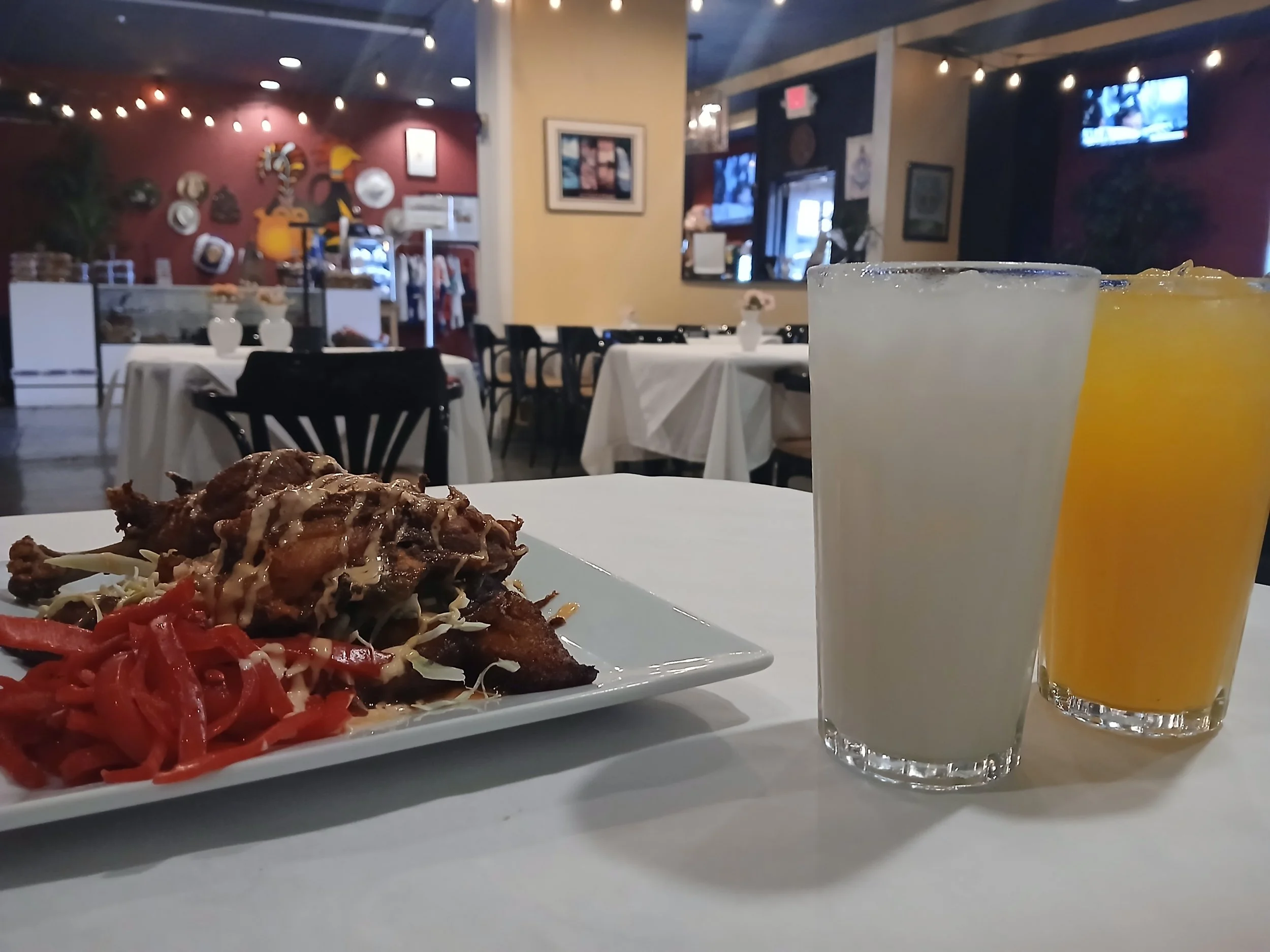
Pollo Mesapa, a dish with fried chicken, sweet plantain, pink onions, chirmol, tomato sauce and dressing, is one of many dishes served at Honduras’ Kitchen. A few drinks specific to Honduras are the white Guanabana drink and yellow-orange Passionfruit drink. Photo by Argentina Talley
Honduras’ Kitchen, located in downtown Long Beach, has represented and supported the Honduran community through culture and food for over three decades. However, this dedication has recently been interrupted by ICE raids throughout the city.
“Unfortunately, the reality is we’re struggling to stay afloat because people have stopped coming to visit us because of the fear of what might happen,” co-owner and manager of the restaurant in Long Beach, Rafael Larios III, said.
Besides food delivery, there are other ways the public, immigrant community and business owners can support each other.
“Shopping at them, but also showing up for them in actual protests, doing what Minneapolis has been doing,” said Alfredo Carlos, Assistant Professor of Labor Studies at California State University, Dominguez Hills. “If they don't shut down, but maybe if they provide discounts for people at the protests, I know for a fact that the people that are protesting will go and frequent that establishment a lot more,” Carlos said.
Its first location opened in Huntington Park in 1991 when Rafael II and Maritza Larios decided to start a business based on Honduran cuisine and culture.
After several years, and gaining popularity by streaming soccer games, Rafael rented more places to accommodate more people.
“That caused him to realize where certain events were doing better, one being here in Long Beach, because Long Beach has a large population of [the] Honduran community,” Larios III, said.
Larios’ father purchased the building from a previous Honduran restaurant, and it opened as the second location in 2006.
Although this newer spot is only known locally, the restaurant itself, as well as its first location, is known nationwide and globally.
“We would bring social media influencers, soccer players, soccer coaches, different things [that] people that learn their culture might [like],” Larios III said.
Those invited to the restaurant include Lil June Afro Punta, CEO of Honduran dance label Unity Soul Company, and James Tir, owner of lbfoodcoma.
As he left the military and focused on the restaurant, Larios III had a few interactions with patrons that left him wanting to pursue a new goal.
“When I first took over this location in 2012, there were a lot of people who just didn’t know Honduran food. They would come in here and they thought it was Mexican food,” Larios III said.
To bring awareness to the difference between this cuisine and other Latino cuisines, he points out items that are unique to Honduras.
“One thing that I always emphasize is las tejadas [fried plantains],” Larios III said. “I explain to [them that] they’re called tejadas because of the angle that we cut them.”
While engaging customers in the richness of the culture here in the United States, Larios III and his brother also gave aid abroad by helping community members provide donations.
The Larios Foundation, started in 2020 by the family, has its origins dating back to 1999, when Hurricane Mitch hit Honduras.
At the time, Hondurans living in the U.S. were devastated. Since they could not send essential supplies to their families, they gave donations to the restaurant.
“I remember our house, when we used to live in South Gate, was just full of donations, like mountains,” Larios III said.
Shirley Andrade, 42, and a frequent local customer at the location in Huntington Park, finds a comfortable, ambient atmosphere when she goes to eat there.
“It’s really quiet, and it’s a nice place to just eat in peace,” Andrade said.
Rafael Larios III is still helping his people in Honduras and plans to visit the country in March, in collaboration with Rotary International, a global non-profit organization that helps sustain communities through essential resources aiming to reduce poverty and disease.
“We, as Hondurans, have an obligation to teach people our culture. It’s in our blood,” Larios III said.
Popular Dishes
Pollo Mesapa - dish with fried chicken, sweet plantain, pink onions, chirmol, tomato sauce and dressing, typically served with tejadas on the side.
Tejadas - Fried, green plantain slices served with a variety of dishes.
Baleadas - A well-known and popular dish served in Honduras and here in the United States. Baleadas consist of a flour tortilla with eggs, smashed, refried beans, cream (crema), and dry cheese (such as cotija cheese.) Additional add-ons can include any kind of meat and avocado.